

Download The Course Brochure Link
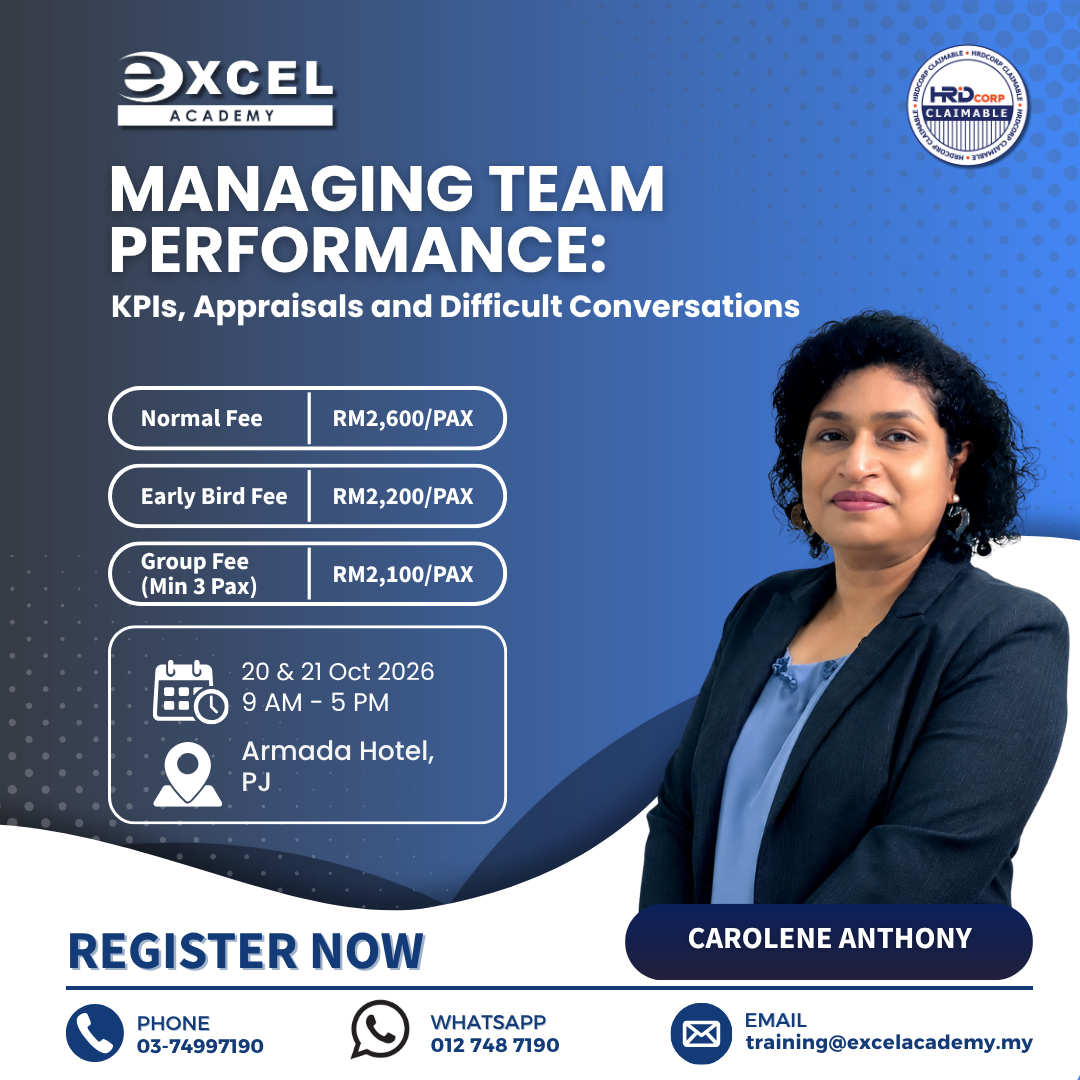
This two-day practical programme equips HR professionals, people managers and team leaders with the skills to manage employee performance with greater clarity, consistency and confidence. It takes participants through the full performance management cycle, from setting clear expectations and meaningful KPIs to monitoring progress, conducting fair appraisals, handling difficult conversations and managing underperformance.
Rather than treating performance management as a once-a-year appraisal exercise, the programme focuses on building an ongoing process of setting expectations, gathering evidence, giving timely feedback, coaching employees and following through on agreed actions. Participants will learn how to assess performance more objectively, reduce common rating biases and conduct appraisal conversations that are constructive, credible and focused on improvement.
Using realistic Malaysian workplace scenarios, participants will practise handling challenging situations such as rating disagreements, defensiveness, recurring underperformance and the transition from informal coaching to a structured Performance Improvement Plan (PIP). The programme also introduces the responsible use of AI tools to support KPI wording, question preparation and neutral follow-up documentation while protecting confidential employee information.
What Will You Learn?
By the end of this programme, participants will be able to:
- Translate organisational priorities and job responsibilities into clear performance expectations, KPAs, KPIs, targets and behavioural standards.
- Develop meaningful and measurable KPIs that support fair performance monitoring and appraisal.
- Conduct regular performance check-ins and maintain objective, job-related evidence throughout the review cycle.
- Provide timely, specific and constructive feedback to address performance gaps early.
- Prepare and conduct structured, evidence-based appraisal conversations that recognise achievements and address improvement areas.
- Apply rating scales, calibration techniques and bias checks more consistently.
- Handle rating disagreements, denial, defensiveness, emotion and blame without avoiding the performance issue.
- Conduct difficult performance conversations using factual, respectful and accountable language.
- Develop Performance Improvement Plans with measurable expectations, support actions, review dates and documented outcomes.
- Use AI tools responsibly to improve KPI wording, prepare questions and draft neutral follow-up notes.
Course Outline
Module 1: Performance Management as a Continuous Process
- Understand the difference between performance management and annual appraisal.
- Explore the performance cycle: plan, align, monitor, coach, review and improve.
- Connect individual performance with team and organisational priorities.
- Clarify the roles and responsibilities of managers, employees and HR.
Module 2: Setting Clear Expectations and Effective KPIs
- Translate job responsibilities into clear and measurable performance expectations.
- Develop SMART KPIs, targets and appropriate measurement criteria.
- Balance results, quality, process and behavioural expectations.
- Identify and improve vague, activity-based or unrealistic KPIs.
Module 3: Monitoring Performance and Coaching Early
- Conduct effective check-ins to review progress, challenges and support needed.
- Gather objective evidence based on results and observable behaviour.
- Deliver timely and constructive feedback throughout the performance cycle.
- Identify whether gaps relate to capability, clarity, resources or motivation.
Module 4: Fair Assessment, Ratings and Appraisal Preparation
- Assess performance using KPI results, evidence and relevant context.
- Apply rating scales and behavioural anchors more consistently.
- Recognise common appraisal biases such as recency, halo and leniency.
- Prepare evidence, questions and key discussion points before an appraisal.
Module 5: Conducting an Effective Appraisal Conversation
- Open and structure the appraisal meeting effectively.
- Review achievements and performance evidence objectively.
- Give constructive feedback while addressing improvement needs.
- Manage employee input and rating disagreements professionally.
Module 6: Handling Difficult Performance Conversations
- Separate poor performance from capability, conduct and contextual issues.
- Prepare facts, examples and expected outcomes before the conversation.
- Respond effectively to denial, defensiveness, anger, blame and emotion.
- Communicate expectations, support and follow-up actions clearly.
Module 7: From Feedback to a Performance Improvement Plan
- Determine when informal coaching should move into a structured PIP.
- Define performance gaps and the required standards clearly.
- Set measurable improvement goals, support actions and review dates.
- Document discussions, commitments and outcomes objectively.
Module 8: Integrated Simulation and Manager Action Plan
- Prepare evidence, rating rationale and conversation objectives.
- Practise conducting an appraisal and managing disagreement.
- Address performance gaps and agree on improvement actions.
- Develop a practical 30-day workplace action plan for implementation.