

In today’s fast-paced and competitive business world, technical skills alone are no longer enough for employees to thrive in their careers. Employers are increasingly recognizing the importance of soft skills, also known as interpersonal or people skills, in the workplace. Soft skills encompass a range of personal attributes and behaviors, including communication, leadership, adaptability, teamwork, problem-solving, and emotional intelligence, among others. These skills are critical for employees to effectively collaborate, build relationships, and navigate complex work environments. In this article, we will delve into the significance of soft skills in the workplace and how employees can master them through effective training and improvement programs.
Why are Soft Skills Important?
Soft skills are essential for success in the modern workplace for several reasons. First, effective communication skills are crucial for building relationships with colleagues, clients, and customers. Employees who can clearly articulate their ideas, actively listen to others, and convey information with empathy are more likely to foster positive interactions and resolve conflicts efficiently.
Second, leadership skills are vital for employees at all levels of an organization. Effective leadership involves motivating and influencing others, setting goals, making decisions, and inspiring a team to achieve their best performance. Employees with strong leadership skills can drive innovation, foster a positive work culture, and contribute to the overall success of the organization.
Third, adaptability and flexibility are critical in today’s ever-changing business environment. Employees who can quickly adapt to new technologies, processes, and market trends can stay ahead of the curve and thrive in dynamic work environments. Being able to handle change with resilience and an open mindset is a valuable soft skill that can set employees apart.
Finally, teamwork and collaboration skills are crucial for success in today’s interconnected and globalized workplace. Being able to work effectively with diverse teams, share ideas, and contribute to a collaborative work culture is essential for achieving common goals and solving complex problems.
Mastering Soft Skills through Employee Training and Improvement Programs
To excel in soft skills, employees need opportunities for training and improvement. Here are some ways organizations can implement effective training programs:
- Customized Training: Employee training programs should be customized to the specific needs of the organization and its employees. This involves conducting assessments to identify skill gaps and designing training content that is relevant, practical, and aligned with the organization’s goals and values.
- Engaging Learning Methods: Training programs should incorporate a variety of engaging learning methods, such as workshops, role-plays, simulations, and case studies. These methods encourage active participation and application of concepts in real-world scenarios, enhancing the learning experience.
- Ongoing Support: Soft skills are developed and refined over time, so it’s crucial to provide ongoing support to employees. This can include mentoring, coaching, and providing access to resources and tools for continuous self-directed learning.
- Feedback and Assessment: Regular feedback and assessments are critical to measure employees’ progress and identify areas for improvement. This can involve performance evaluations, self-assessment tools, and feedback from managers, peers, and customers.
- Leadership Development: Leadership skills are vital soft skills that can be developed through targeted training programs. Organizations should invest in leadership development initiatives to cultivate a pipeline of effective leaders who can inspire and motivate their teams.
Conclusion
In conclusion, mastering soft skills is essential for employees to succeed in today’s workplace. Effective communication, leadership, adaptability, teamwork, and problem-solving skills are critical for building positive relationships, driving innovation, and navigating dynamic work environments. Organizations can implement customized and engaging employee training programs that provide ongoing support, feedback, and leadership development to help employees develop and improve their soft skills. By investing in the development of soft skills, organizations can foster a skilled and adaptable workforce that is better equipped to thrive in the ever-changing business landscape.
If you’re interested in developing your team’s soft skills, consider enrolling in our HRD Corp Claimable training programs in various fields including digital marketing, IT, multimedia, soft skill, and more. Contact us at 1700-81-5520 or email us at training@excelacademy.my for more information.

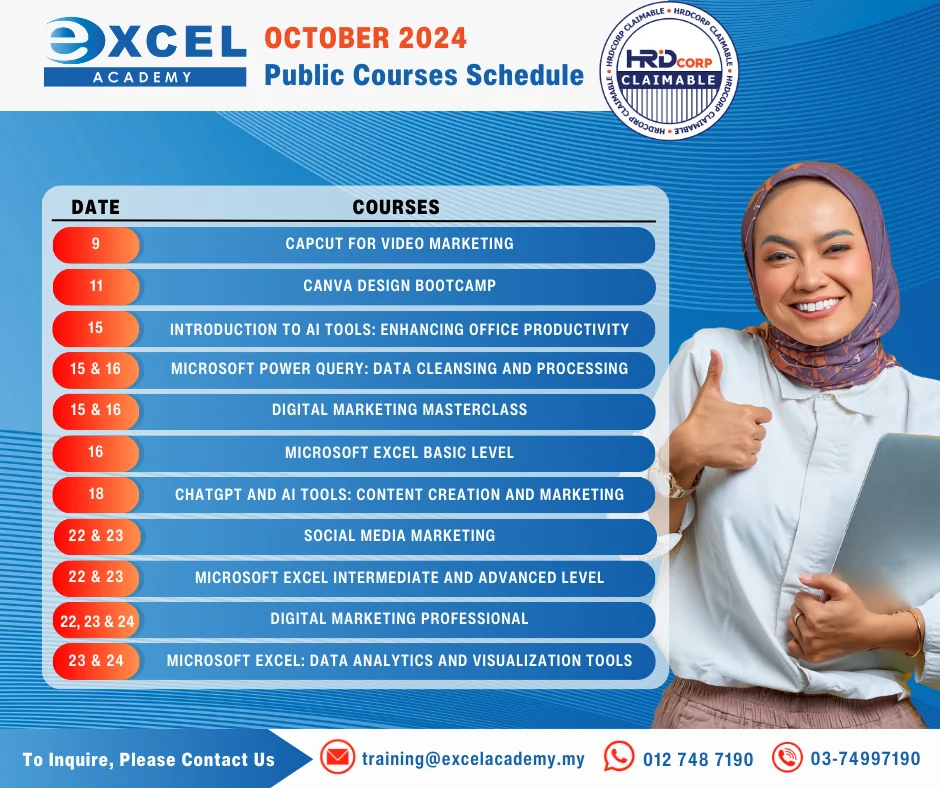
![[HRD Corp Claimable Course] – October – December Trainings](https://www.excelacademy.my/wp/wp-content/uploads/2024/10/HRDCorpClaimableCourse-October-ExcelAcademy-500x383.webp)
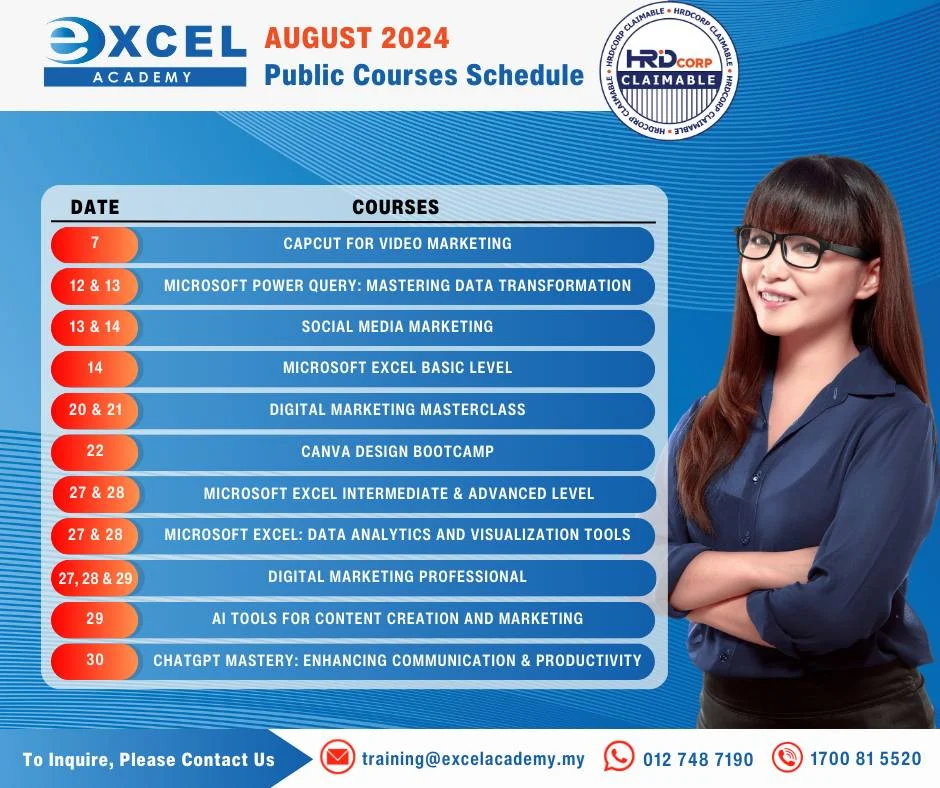
![[HRD Corp Claimable Course] – August-November Trainings](https://www.excelacademy.my/wp/wp-content/uploads/2024/07/HRDCoprClaimableCourse-August-ExcelAcademy-500x383.webp)
![[HRD Corp Claimable Course] Digital Marketing Masterclass](https://www.excelacademy.my/wp/wp-content/uploads/2024/05/HRDCorpClaimableCourse-Digital-Marketing-Masterclass-ExcelAcademy-500x383.webp)
![[HRDCorpClaimable] – In-House Training](https://www.excelacademy.my/wp/wp-content/uploads/2024/05/HRDCorpClaimable-In-House_Training-Excel-Academy-500x383.webp)
![[HRD Corp Claimable Course] – Microsoft PowerPoint Intermediate to Advanced Level for Areca Capital Sdn Bhd](https://www.excelacademy.my/wp/wp-content/uploads/2024/05/HRDCorpClaimable-Microsoft-PowerPoint-Intermediate-to-Advanced-Level-for-Areca-Capital-Sdn-Bhd-500x383.webp)



Leave A Comment