

As the business landscape becomes increasingly competitive, organizations are recognizing the importance of investing in their employees’ growth and development. Employee training and improvement programs have emerged as crucial tools to enhance productivity, drive innovation, and foster a positive work culture. In this article, we will explore the significance of employee training and improvement, particularly in the context of soft skills, and how organizations can leverage these programs to unlock the full potential of their workforce.
In today’s rapidly changing business environment, technical skills are no longer sufficient for success. Employers are seeking employees who possess a wide range of soft skills, including communication, leadership, teamwork, adaptability, and problem-solving, among others. Soft skills are essential in fostering effective collaboration, building strong relationships with customers and colleagues, and navigating complex workplace dynamics. Moreover, soft skills are transferable, meaning they can be applied across different roles and industries, making them invaluable in a rapidly evolving job market.
Employee training and improvement programs focused on soft skills offer several benefits for both employees and organizations. For employees, these programs provide opportunities for personal and professional growth, helping them become more confident, effective, and adaptable in their roles. Soft skills training can also boost employees’ job satisfaction and engagement, leading to higher retention rates and reduced turnover costs. For organizations, employees with strong soft skills can contribute to improved team performance, enhanced customer service, and increased innovation and creativity. Additionally, organizations that invest in their employees’ development are more likely to attract and retain top talent, creating a competitive advantage in the market.
Implementing effective employee training and improvement programs requires careful planning and execution. Here are some key steps organizations can take to ensure success:
- Assessing Needs: Organizations should conduct a thorough assessment to identify the specific soft skills that are most critical for their workforce. This can be done through surveys, assessments, and feedback from employees, managers, and customers. Understanding the current skill gaps will help in designing targeted training programs that address the specific needs of the organization.
- Designing Engaging Programs: Employee training programs should be designed to be engaging and interactive, incorporating a variety of learning methods such as workshops, simulations, role-plays, and case studies. This will ensure that employees are actively involved in the learning process and can apply the concepts to real-world situations.
- Customizing Content: Training content should be tailored to the organization’s unique needs and culture. It should be relevant, practical, and aligned with the organization’s goals and values. Customized training content increases the relevance and effectiveness of the program, resulting in better learning outcomes.
- Providing Ongoing Support: Employee training and improvement should not be seen as a one-time event, but rather as an ongoing process. Organizations should provide continuous support to reinforce learning and provide opportunities for practice and application of skills. This can include mentoring, coaching, and providing access to resources and tools for self-directed learning.
- Measuring Success: Organizations should establish clear metrics to measure the success of their employee training and improvement programs. This can include evaluating changes in employee performance, productivity, engagement, and satisfaction. Feedback from employees, managers, and customers can also provide valuable insights into the effectiveness of the programs and areas for improvement.
In conclusion, employee training and improvement programs, especially those focused on soft skills, are essential for unlocking the potential of the workforce. They provide employees with the skills they need to succeed in today’s dynamic business environment, while also benefiting organizations by driving productivity, innovation, and employee retention. By carefully planning and executing effective training programs, organizations can invest in their employees’ growth and development, leading to a more skilled and engaged workforce and a competitive edge in the market.
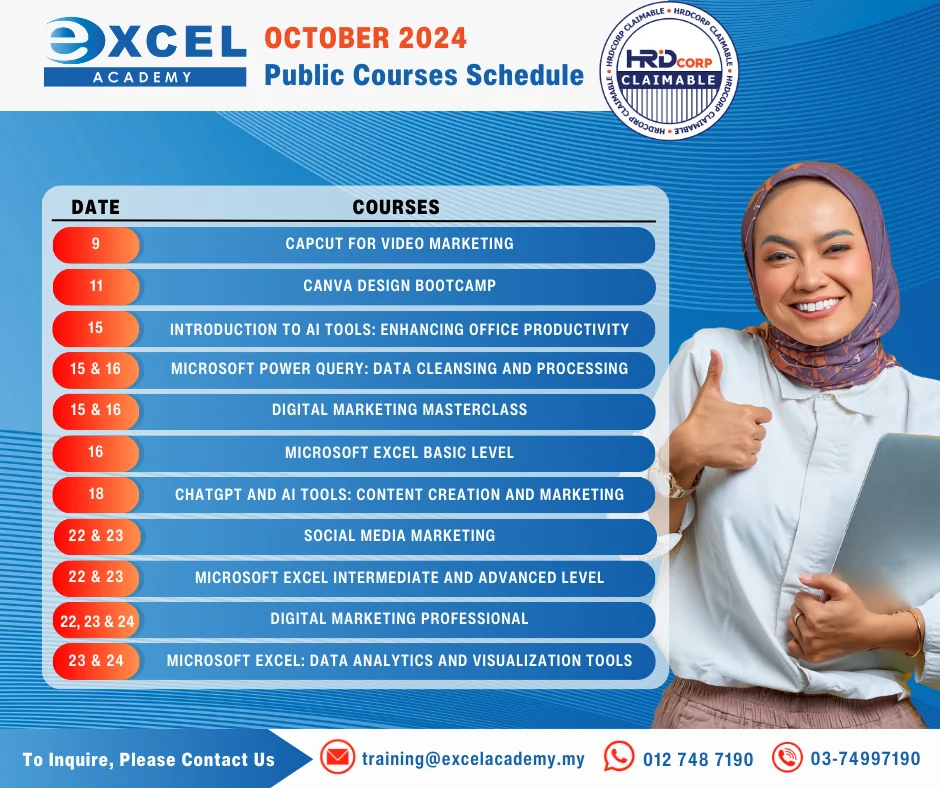
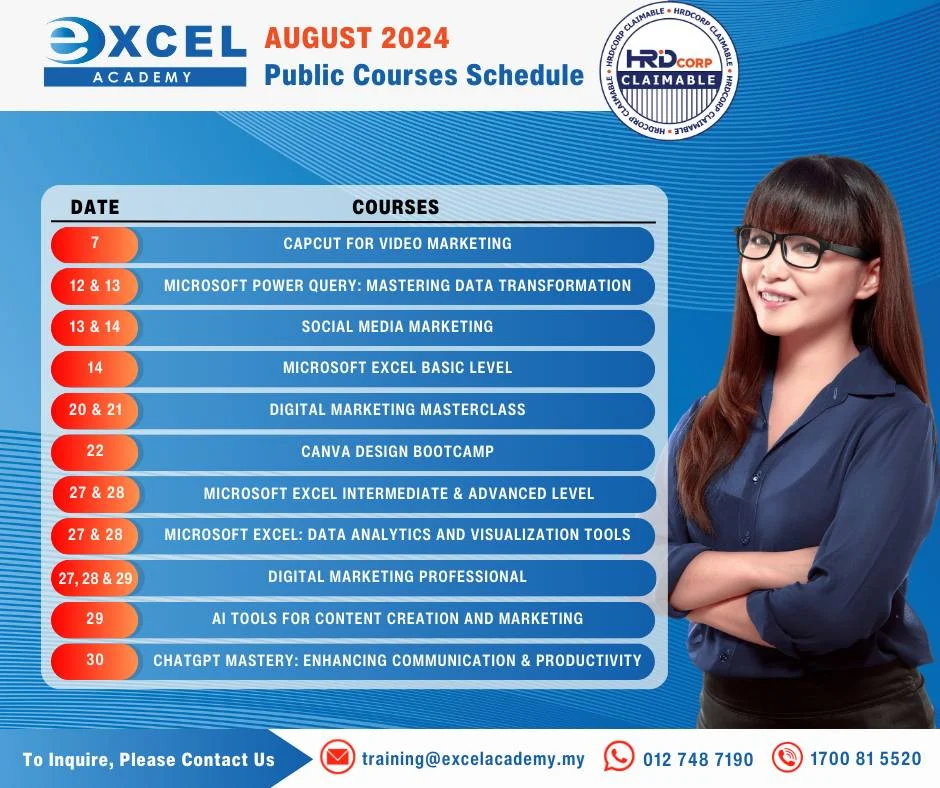
If you’re interested in developing your team’s skills, consider enrolling in our HRD Corp Claimable training programs in various fields including digital marketing, IT, multimedia, soft skill, and more. Contact us at 1700-81-5520 or email us at training@excelacademy.my for more information.

![[HRD Corp Claimable Course] – October – December Trainings](https://www.excelacademy.my/wp/wp-content/uploads/2024/10/HRDCorpClaimableCourse-October-ExcelAcademy-500x383.webp)
![[HRD Corp Claimable Course] – August-November Trainings](https://www.excelacademy.my/wp/wp-content/uploads/2024/07/HRDCoprClaimableCourse-August-ExcelAcademy-500x383.webp)
![[HRD Corp Claimable Course] Digital Marketing Masterclass](https://www.excelacademy.my/wp/wp-content/uploads/2024/05/HRDCorpClaimableCourse-Digital-Marketing-Masterclass-ExcelAcademy-500x383.webp)
![[HRDCorpClaimable] – In-House Training](https://www.excelacademy.my/wp/wp-content/uploads/2024/05/HRDCorpClaimable-In-House_Training-Excel-Academy-500x383.webp)
![[HRD Corp Claimable Course] – Microsoft PowerPoint Intermediate to Advanced Level for Areca Capital Sdn Bhd](https://www.excelacademy.my/wp/wp-content/uploads/2024/05/HRDCorpClaimable-Microsoft-PowerPoint-Intermediate-to-Advanced-Level-for-Areca-Capital-Sdn-Bhd-500x383.webp)

Leave A Comment